Research and Education Center for Japanese Law

Information

Gender Perspectives on Strategic Lawsuits Against Public Participation (SLAPPs): The Recent EU Directive in Context

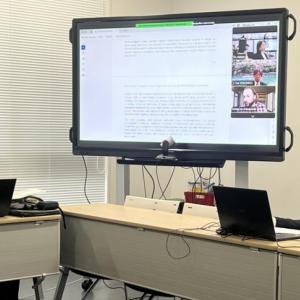
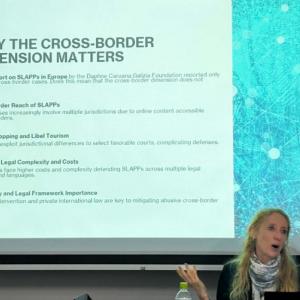
On 14 October 2026, Nagoya University’s Graduate School of Law welcomed Professor Sara De Vido for a lecture on gender perspectives on strategic lawsuits against public participation (SLAPPs). Professor De Vido is Full Professor of International Law at Ca’ Foscari University of Venice, Italy, and Senior Expert on Violence against Women at the European Equality Law Network.SLAPPs are abusive legal proceedings used to intimidate or silence those who participate in public debate. Professor De Vido examined their implications for democracy and human rights, highlighting the particular vulnerabilities faced by women who speak out about harassment and violence. Her presentation emphasised the need for gender-sensitive responses that address power imbalances and gender stereotypes.Situating recent European developments within the broader international legal framework, Professor De Vido introduced the Council of Europe’s Recommendation CM/Rec(2024)2 and the EU’s Anti-SLAPP Directive, Directive (EU) 2024/1069. She explained the political and institutional context that shaped the Directive and discussed its distinction between manifestly unfounded claims and abusive court proceedings.Drawing on the case of Daphne Caruana Galizia, the murdered Maltese investigative journalist, Professor De Vido explored the cross-border dimensions of SLAPPs and the burdens they impose on those targeted. She also examined how gender stereotypes can shape abusive litigation. In particular, she discussed how the #MeToo movement increased the visibility of survivors’ experiences while also prompting retaliatory defamation proceedings.To conclude, Professor De Vido introduced recent publications reflecting her wider research interests, including the open-access volume Gendering International Legal Responses to Environmental Chronic Emergencies, co-edited with Deborah Russo and Enzamaria Tramontana (Edward Elgar Publishing, 2026).The lecture offered valuable insights into the relationship between gender, access to justice and freedom of expression, encouraging reflection on how legal systems can better protect public participation.This special lecture series are part of the “Lawyer Training Program for Globalization,” funded by a donation from the Shinnippon-Hoki Foundation.
The Fourth Nagoya University Prize of Ius Commune Award Ceremony and Thesis Presentation was held

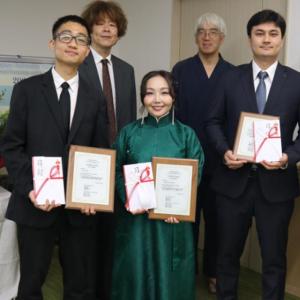
On September 25, Nagoya University held the Fourth Ius Commune Award Ceremony and Thesis Presentation. The Ius Commune award was established in 2023 to further promote the training of legal professionals who will help lead Asia in the future, and to encourage and support the development of students’ research. This prize is administered with donations to Nagoya University’s “Asian Legal Professional Support” Special Fund. At the award ceremony, Mr. LE Manh Hung and Ms. OCHIRKHUYAG Sodchimeg, this year's Excellence Award (First Place) awardees, and Mr. SHODIYOROV Otabek Shermamatovich and Mr. SON Sam, the Excellence Award recipient were presented with plaques and supplementary prizes, followed by a presentation of their winning theses. The ceremony and thesis presentations were attended by about 60 guests. The audience included donors to the Nagoya University “Asian Legal Professional Support” Special Fund, professors,current students, and the general public. ■Introduction of Awardees: https://www.law.nagoya-u.ac.jp/faculty-of-law-news/2026-09-03.html   ■About Prize of Ius Communehttps://www.law.nagoya-u.ac.jp/kikin/#ius_commune 

Guest Lecture Explores the Evolving Relationship between Generative AI and Copyright Law

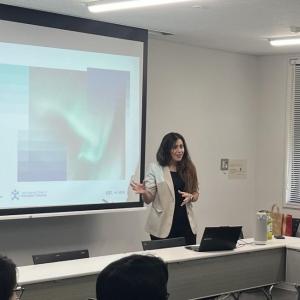
On 27 July 2026, the Graduate School of Law, Nagoya University, welcomed Dr. Rossana Ducato, Senior Lecturer in IT Law and Regulation at the University of Aberdeen School of Law (UK), for a guest lecture entitled “Copyright and Generative AI: A Comparative Perspective.” The lecture examined how the rapid development of generative artificial intelligence (GenAI) is reshaping copyright law across different jurisdictions, with a particular focus on the European Union, the United Kingdom, and Japan.The lecture began with a review of the fundamental principles of copyright law. Dr. Ducato explained that copyright protects the original expression of ideas rather than the ideas themselves, and grants authors both moral and economic rights. She also introduced the concept of copyright exceptions and limitations, including text and data mining (TDM), teaching, research, and other public interest uses. These exceptions have become increasingly important in the context of AI development.The second part of the lecture focused on how copyright issues arise at different stages of building an AI model, namely data collection, model training, and content generation. In particular, Dr. Ducato highlighted three major legal questions surrounding the use of copyrighted works as training data: (1) whether AI models reproduce copyrighted works; (2) whether AI-generated outputs may infringe existing copyrights; and (3) whether AI-generated outputs are copyrightable.Subsequently, Dr. Ducato introduced the different approaches adopted by various jurisdictions to the first issue, namely whether AI models reproduce copyrighted works during training. In Japan, Article 30-4 of the Copyright Act provides a relatively broad exception for text and data mining when the purpose is not to enjoy the expressive content of copyrighted works. In contrast, the European Union distinguishes between research-related TDM and commercial TDM, while allowing copyright holders to opt out of certain uses. The United Kingdom adopts a more limited exception for non-commercial research.The lecture also examined whether AI-generated outputs are copyrightable. Dr. Ducato explained that, under the current approaches in the EU and Japan, copyright generally requires sufficient human creativity. AI-generated works created through simple prompts alone are unlikely to qualify for protection, whereas works produced through substantial human creative input may still satisfy the originality requirement. She also discussed the UK's unique provision on computer-generated works and recent proposals to reconsider its future.Copyright law is entering a period of significant transformation. The lecture provided participants with a timely overview of one of the most rapidly developing areas of contemporary intellectual property law. Through comparative analysis and discussion of recent cases, it encouraged participants to think critically about how existing copyright frameworks can respond to technological innovation while maintaining an appropriate balance between the interests of creators, AI developers, and the public.This special lecture is a part of the “Lawyer Training Program for Globalization,” funded by a donation from the Shinnippon-Hoki Foundation.
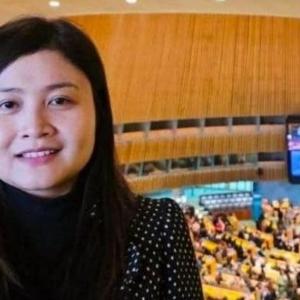
Our Graduate was Appointed as the Vice Rector for Academics at NUM

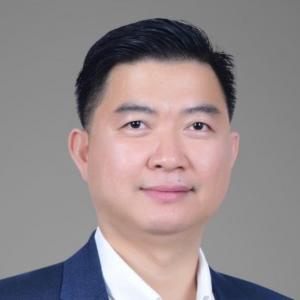
Assistant Professor Pok Phearoun has been appointed as the Vice Rector for Academics at the National University of Management (NUM), by Sub Decree dated on July 3, 2026. An alumna of the prestigious Graduate School of Law at Nagoya University, she earned her Master of Laws there in 2011. Her areas of expertise include civil procedure law, civil law, contract law, and business law. In 2013, she served as the President of Cambodian Student Association of Nagoya, Japan. Prior to her promotion to Vice Rector, Assistant Professor Pok Phearoun dedicated over a decade of service to NUM as a lecturer and research staff beginning in 2014. Her extensive career is marked by a deep commitment to institutional growth, characterized by actively co-founding the Cambodian Student Research Competition in 2014, coordinating research projects, teaching, and coaching. In recognition of her academic contributions, she was granted the title of Assistant Professor by Royal Decree on June 9, 2023, and subsequently took on the role of Director of the Center of Excellence for R&D and Innovation.

GSL Graduate Dr. Tsogt Tsend Appointed as Chief Justice of the Supreme Court of Mongolia

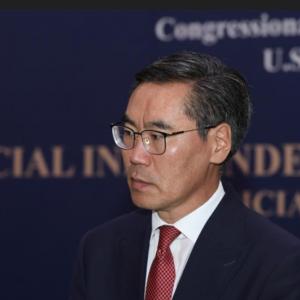
We are delighted to announce that Dr. Tsogt Tsend, a distinguished alumnus of the Asia Satellite Campuses Institute (ASCI) doctoral program, has been officially appointed as the Chief Justice of the Supreme Court of Mongolia on June 15, 2026.Dr. Tsogt has played a central role in the development of Mongolia’s judiciary for many years. After serving as a judge in various courts, he was appointed as a Justice of the Supreme Court in 2020. He completed his LL.D. at Nagoya University’s Graduate School of Law through the ASCI program in 2017, focusing on the development of administrative litigation in Mongolia under the supervision of Prof. Katsuya Ichihashi. Notably, he is the very first graduate of the ASCI doctoral program, making his appointment an especially meaningful achievement for our university.His appointment as Chief Justice marks a historic milestone for Mongolia and a moment of great pride for the Graduate School of Law at Nagoya University, which is committed to fostering legal professionals and researchers across Asia. The Graduate School of Law at Nagoya University extends its warmest congratulations to Dr. Tsogt and wishes him continued success in his new role. We look forward to further strengthening our academic and professional ties with Mongolia through his leadership.

Our Graduate was Appointed as Vice-Dean of the School of Graduate Studies at NUM

We are pleased to share the news from Cambodia that Associate Professor Dr. Nop Kanharith, an alumnus of the Graduate School of Law at Nagoya University, was recently appointed by the Ministry of Education, Youth and Sport as Vice-Dean of the School of Graduate Studies at the National University of Management (NUM), effective 11 May 2026.Before his appointment as Vice-Dean, Associate Professor Nop Kanharith served as Program Director of the International Graduate Programs in the School of Graduate Studies at the National University of Management. Since 2024, he has also been entrusted with managing the newly established School of Public Policy at the NUM International Campus. He has played an active role in coordinating Erasmus+ projects, including SCALe and ALIGNING.He is also a member of the Bar Association of the Kingdom of Cambodia (BACK) and brings more than 10 years of legal practice experience, including over six years as Head of the Legal Department at a commercial bank in Cambodia. His areas of expertise include labor and employment law, contract law, corporate law, and business law. He earned a Master of Law from Nagoya University in 2010 and a Doctor of Law (Comparative Law) from the same university in 2013.

Navigating the Flood-Drought Nexus in Central Asia: Water Resilience in Kazakhstan

On April 6, 2026, Nagoya University Graduate School of Law hosted a multidisciplinary session on water resilience and climate challenges in Central Asia, bringing together experts from law, environmental science, and policy.The event opened with a presentation by Dr. Aizhan Skakova, a member of the Public Chamber of the Mazhilis of the Parliament of the Republic of Kazakhstan and Chair of the Kazakh Society for Nature Protection. She discussed the water–energy–food nexus in Kazakhstan and explained how these sectors are closely connected and why this creates legal and regulatory challenges. In particular, she highlighted water scarcity, reliance on transboundary rivers, and outdated infrastructure. She also addressed glacier retreat in Central Asia, stressing the need for stronger legal frameworks to ensure long-term water security. As part of her presentation, she screened the short documentary “Alatau – Following the Disappearing Glaciers.”The second presentation by Maciej M. Sokołowski, Specially Appointed Associate Professor at Keio University, introduced his forthcoming book, “Navigating the Flood-Drought Nexus in Central Asia: Water Resilience in Kazakhstan.” He focused on the growing problem of floods followed by droughts and discussed how law can respond to these challenges. He proposed Flood-MAR (Managed Aquifer Recharge) as a practical solution and emphasized the importance of integrating such approaches into legal and regulatory systems.The session concluded with remarks by Professor Janay Sagin, Professor of Geomatics Engineering at the School of Information Technology and Engineering (SITE), Kazakh-British Technical University (KBTU), who discussed United Nations initiatives linking glaciers, water governance, and ocean sustainability, emphasizing the need for coordinated global responses. 

Nagoya University received the Honourable Mention for Best Memorandum at the Willem C. Vis East International Commercial Arbitration Moot in Hong Kong.

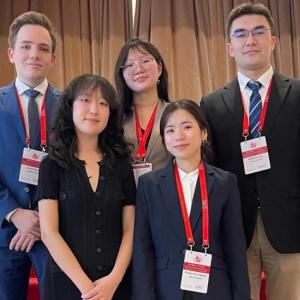
Congratulations to Mr. Elbek Suvonov (LL.M.), Ms. Kieu Thoa Nguyen (LL.M.), Ms. Erkhee Sukhbaatar (G30), Mr. Lennert Grafe (NUPACE), and Ms. Suglegmaa Chimidtseren (G30) on receiving the Honourable Mention for Best Memorandum at the 23rd Willem C. Vis East International Commercial Arbitration Moot in Hong Kong. The Willem C. Vis Moot is the world’s preeminent moot court competition focusing on international commercial arbitration, and it welcomed a record-breaking more than 160 teams from around the world this year. Despite this intense competition, the Nagoya University team received the Honourable Mention for Best Memorandum on Behalf of Claimant for its written submission, once again demonstrating the school’s strong research capabilities.Moreover, the team emerged as the runner-up at the 19th Vis Moot Japan, held earlier this year in Kyoto. This year’s competition saw a record number of 16 teams from Switzerland, Singapore, Brazil, Mexico, Vietnam, Taiwan, and Japan. The Nagoya University team achieved the best result among Japanese universities, maintaining its dominance in Japan for the fourth consecutive year.The team would like to thank Prof. Yokomizo and Prof. Carapeto for their constant and generous support. The team also expresses their gratitude to their coaches, Dmytro Izotov (Foreign Attorney at the Meilin International Law Firm) and Thanh Thao Do (Intern at Baker McKenzie Hanoi), for their guidance and invaluable advice. This activity is financially supported by the Shinnippon-Hoki Foundation.